
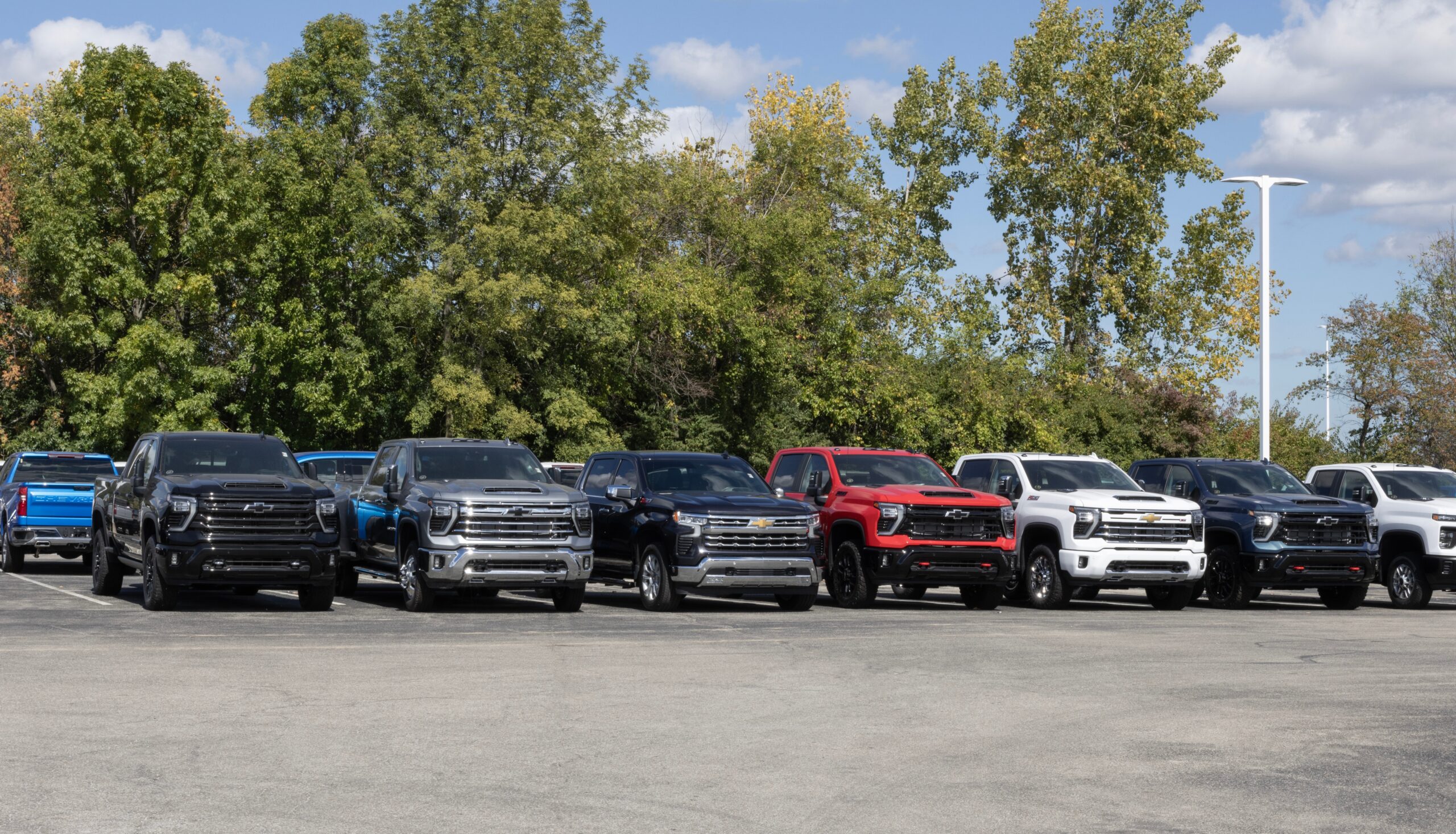
Choosing the right heavy-duty truck for your Dallas-Fort Worth business or personal projects comes down to understanding your daily demands. Whether you are hauling equipment along I-35, pulling a gooseneck trailer out to West Texas, or managing a fleet around the Metroplex, the debate between diesel and gasoline powertrains remains a central decision point.
When evaluating used diesel vs gas trucks for towing performance, the decision affects your upfront investment, routine maintenance, fuel costs, and long-term resale value. This guide breaks down performance metrics, total cost of ownership, and practical trade-offs to help you choose the truck your DFW operations require.
When Should You Choose a Diesel Truck Over a Gas Truck?
Choose a diesel truck if you regularly tow trailers weighing over 10,000 pounds, drive more than 15,000 to 20,000 miles annually, and prioritize long-term engine longevity past 250,000 miles. Choose a gas truck if your daily towing remains under 10,000 pounds, your annual driving stays low, and you want to minimize upfront purchase price along with routine service costs.
To make the right choice for your workload, evaluate these core factors:
- Towing Weight Thresholds: Diesel engines produce massive low-end torque, making them necessary for continuous heavy loads exceeding 10,000 to 12,000 pounds. Gas engines handle light to medium loads efficiently but labor under sustained maximum weight limits.
- Annual Mileage: The higher fuel efficiency of a diesel engine balances out higher fuel prices only if you drive long distances every year. Short trips and low annual mileage favor gas engines.
- Maintenance Costs: Diesel powertrains require higher service costs for oil changes, fuel filters, and emission systems, while gas engines offer simpler, lower-cost routine care.
How Do Diesel and Gas Engine Performance Compare for Towing?
The primary technical difference between diesel and gas engines lies in how they generate power. Gas engines create horsepower higher in the RPM range, requiring the engine to rev higher to move heavy loads. Diesel engines rely on high compression ratios and turbocharging to generate maximum torque at low engine speeds.
When pulling a heavy payload, torque is the metric that matters most. Low RPM torque allows a truck to pull heavy trailers from a complete stop without straining the transmission.
Torque and Horsepower Output
A typical 6.6 liter gas V8 engine produces around 400 horsepower and 450 pound feet of torque, reaching peak torque near 4,000 RPM. In contrast, a 6.7 liter turbodiesel engine generates roughly 475 horsepower and over 1,000 pound feet of torque, reaching peak pulling power as low as 1,600 RPM.
This difference changes the driving experience significantly. Under a heavy load, a gas truck shifts down frequently and runs at higher revs when climbing highway inclines. A turbodiesel holds its gear, maintains speed at low RPM, and pulls uphill with minimal engine noise or effort.
Transmission Efficiency and Towing Dynamics
Modern heavy-duty trucks pair these engines with high gear count automatic transmissions, usually 6 speed or 10 speed units. In a gas powertrain, the transmission shifts frequently to keep the engine in its power band. While modern transmissions manage this well, constant shifting under load increases fluid temperatures and mechanical wear over time.
A diesel engine pairs with these transmissions to maintain a steady gear. The low-end torque keeps the vehicle in top gears longer, reducing heat buildup and providing smoother power delivery across North Texas highways.
What Are the Real Towing Capacities of Popular Used Heavy Duty Trucks?
Comparing specific models highlights how engine choice alters maximum payload and towing capability. When browsing heavy duty used trucks in DFW inventories, buyers frequently compare the main three domestic manufacturers.
Used RAM 2500 vs Ford F-250 Performance Specs
Comparing a used Ram 2500 vs Ford F-250 reveals distinct differences depending on the engine selected under the hood.
The Ford F-250 equipped with the 7.3 liter Godzilla gas V8 offers up to 430 horsepower and 475 pound feet of torque. This configuration delivers a maximum conventional towing capacity of roughly 15,000 to 18,200 pounds depending on axle ratios and cab configurations.
When upgraded to the 6.7 liter Power Stroke Turbodiesel, the Ford F-250 delivers up to 1,050 pound feet of torque, raising conventional towing ratings up to 20,000 pounds or more, with gooseneck ratings climbing even higher.
The RAM 2500 with the 6.4 liter HEMI gas V8 produces 410 horsepower and 429 pound feet of torque, towing up to 17,370 pounds. Selecting the legendary 6.7 liter Cummins Inline 6 Turbodiesel drops horsepower slightly to 370, but boosts torque to 850 pound feet. This powertrain allows the RAM 2500 to tow up to 19,980 pounds with extreme stability.
Chevy Silverado 2500HD Specs
The Chevrolet Silverado 2500HD with the 6.6 liter gas V8 outputs 401 horsepower and 464 pound feet of torque, offering a maximum tow rating around 17,370 pounds. Choosing the 6.6 liter Duramax Turbodiesel V8 brings 470 horsepower and 975 pound feet of torque, boosting maximum towing performance up to 22,500 pounds when properly equipped.
How Do Fuel Efficiency and Fuel Costs Compare in North Texas?
Fuel economy varies based on driving style, load weight, and route conditions, but diesel powertrains consistently offer better fuel efficiency per gallon than their gas counterparts.
Unloaded vs Loaded MPG Metrics
Unloaded, a modern three quarter ton gas truck generally achieves between 12 and 15 miles per gallon on the highway. A comparable turbodiesel truck often reaches 18 to 22 miles per gallon highway under the same conditions.
When towing a 10,000 pound trailer, fuel economy drops for both platforms:
- Gas Heavy Duty Truck: Expect 7 to 10 miles per gallon while towing heavy loads.
- Diesel Heavy Duty Truck: Expect 10 to 14 miles per gallon under similar towing conditions.
Local DFW Fuel Price Considerations
While diesel engines consume less fuel per mile, diesel fuel generally costs more per gallon than regular unleaded gasoline across Texas. To determine whether the fuel efficiency offsets the fuel cost, you must calculate your projected annual mileage.
If you drive 25,000 miles per year, mostly towing equipment across the Metroplex, the 30 percent improvement in fuel mileage offered by a diesel powertrain will yield net savings over time despite higher per gallon fuel prices. If you drive 10,000 miles per year with minimal towing, the gas engine remains the more economical choice.
What Are the Engine Lifespan and Long-Term Durability Expectations?
Durability is one of the main drivers for buyers considering pre-owned diesel trucks Dallas professionals trust for their businesses. The structural design of these engines differs fundamentally to handle high cylinder pressure.
Expected Engine Lifespan Limits
Gas engines are built lighter and operate at higher speeds. With proper maintenance, a modern heavy-duty gas V8 reliably lasts between 200,000 and 250,000 miles before major internal wear requires significant engine service.
Diesel engines feature heavy cast iron blocks, forged steel crankshafts, robust connecting rods, and high-capacity cooling systems. Because they run at lower RPMs, internal component wear occurs at a slower rate. A well-maintained turbodiesel engine regularly reaches 350,000 to 500,000 miles without requiring a complete overhaul.
Transmission and Drivetrain Longevity
While the diesel engine block itself may outlast a gas engine block, the rest of the truck shares similar wear items. Transmissions, suspension components, ball joints, wheel bearings, and brake pads wear out on both platforms based on load and road conditions.
However, because diesel trucks feature heavier engine blocks, front suspension components and front tires often experience slightly higher wear over time compared to lighter gas models.
What Are the Maintenance and Ownership Cost Differences?
While diesel trucks offer better fuel economy and longer engine life, routine maintenance costs are significantly higher for diesel powertrains.
Routine Service Requirements and Costs
A standard oil change on a gas truck requires roughly 6 to 8 quarts of synthetic oil and a standard filter, costing around $70 to $100. A diesel oil change requires up to 12 to 15 quarts of specialized heavy-duty oil plus a larger filter, running $150 to $250 per service.
Additionally, diesel ownership involves extra maintenance tasks:
- Fuel Filter Replacement: Diesel engines feature dual fuel filter systems that must be changed every 10,000 to 15,000 miles to protect high-pressure fuel injectors.
- Diesel Exhaust Fluid (DEF): Modern diesels built after 2010 require DEF additions every few thousand miles to meet emissions standards.
- Water Separator Drainage: Operators must periodically drain water from the fuel separator to avoid damaging the fuel system.
Gas engines use simpler ignition systems with spark plugs and wires, requiring less frequent fuel system maintenance and eliminating the need for DEF fluid.
Emissions System Complexity
Modern diesel trucks utilize complex emissions control hardware, including Selective Catalytic Reduction systems, Diesel Particulate Filters, and Exhaust Gas Recirculation valves.
These components require long highway drives at operating temperature to clean themselves through active regeneration cycles. If a diesel truck is driven exclusively on short, low-speed trips around city streets, these emissions filters can clog prematurely, leading to expensive repairs. Gas truck exhaust systems are simpler and less prone to short trip soot buildup.
Which Truck Choice Retains Better Resale Value in Texas?
Resale value is a major advantage for diesel-powered heavy-duty trucks. The Texas market maintains high demand for pre-owned trucks with strong towing specs.
Depreciation Rates in the Pre-Owned Market
Gas trucks depreciate at a steady rate typical of standard passenger vehicles. Because their expected lifespan drops after 200,000 miles, their market value decreases noticeably once they pass the 120,000 mile mark.
Diesel trucks retain a higher percentage of their initial value over time. A diesel truck with 150,000 miles on the odometer still holds strong appeal for commercial buyers and outdoor enthusiasts because the engine is considered to be in the middle of its operational lifespan.
When buying pre-owned, the higher purchase price of a used diesel truck is often recovered when you sell or trade the vehicle later.
Which Engine Type Fits Your Specific DFW Usage Pattern?
Selecting between gas and diesel ultimately depends on how, where, and how much you drive across North Texas.
The Ideal Gas Truck Owner
A gas heavy-duty truck is the correct choice if you fit these criteria:
- You tow trailers under 10,000 pounds occasionally rather than daily.
- Your annual driving distance stays below 15,000 miles.
- Your daily route consists of short urban trips, frequent starts and stops, or job site idling.
- You prefer lower upfront purchasing costs and predictable, low-cost maintenance.
- Payload capacity inside the truck bed is more important than maximum trailer weight.
The Ideal Diesel Truck Owner
A diesel heavy-duty truck is the ideal choice if you fit these criteria:
- You regularly tow heavy machinery, multi-car trailers, large horse trailers, or heavy fifth wheels exceeding 12,000 pounds.
- You drive more than 20,000 miles annually across Texas highways.
- You need maximum low-end torque for hauling up steep grades or pulling out of unpaved worksites.
- You plan to keep the truck for many years and build high mileage on the chassis.
- You want to maximize vehicle resale value down the road.
Find the Right Pre-Owned Heavy Duty Truck at Dallas Lease Returns
Matching the right engine platform to your workload prevents overpaying for unnecessary capacity or straining a truck that is underpowered for your daily tasks. Exploring pre-owned models gives you access to high trim levels, strong towing capabilities, and proven powertrains without taking the initial depreciation hit of a brand new model.
At Dallas Lease Returns, our inventory features high-quality, well-maintained pre-owned trucks ready to tackle any job site across Dallas, Fort Worth, and the surrounding regions. Browse our online inventory today or speak with our vehicle specialists to find the perfect gas or diesel heavy-duty truck for your towing needs.